Common myths about Bilingual Education: What parents should know
The idea of raising a bilingual child brings to mind lots of exciting possibilities. Imagine the countries your child could visit, study in, and work in, and the opportunities they’ll have!
But like many parents, you may have a few understandable concerns, too. Will learning two languages at the same time confuse your child? Could it affect their academic progress? What if they get better at one language than the other?
These are all valid questions to ask when you’re considering a bilingual education programme for your child.
Below, we take a closer look at some of the most common myths about bilingual education in Singapore’s international schools, and what parents should know.
1. Myth: Learning two languages will confuse my child
Reality: Children can learn and distinguish between multiple languages from an early age.
It's easy to see why many parents continue to believe this myth. Often, young children learning two languages may mix words from both in the same sentence, or respond in one language when spoken to in another.
To a parent, it could look like the child is having trouble separating the two languages. In reality, “mixing” languages is a natural process in language development for bilingual kids.
During this stage, children learn to identify which language to use based on who they’re communicating with and where they are. As they become more proficient, they’ll be more skilled at switching between languages in different contexts.
Keep in mind that bilingual development doesn’t always happen at the same speed in both languages. A child could have a larger vocabulary in one language, but feel more comfortable using another language for a specific topic. This doesn't necessarily mean that one language is “losing” or that the child is confused.
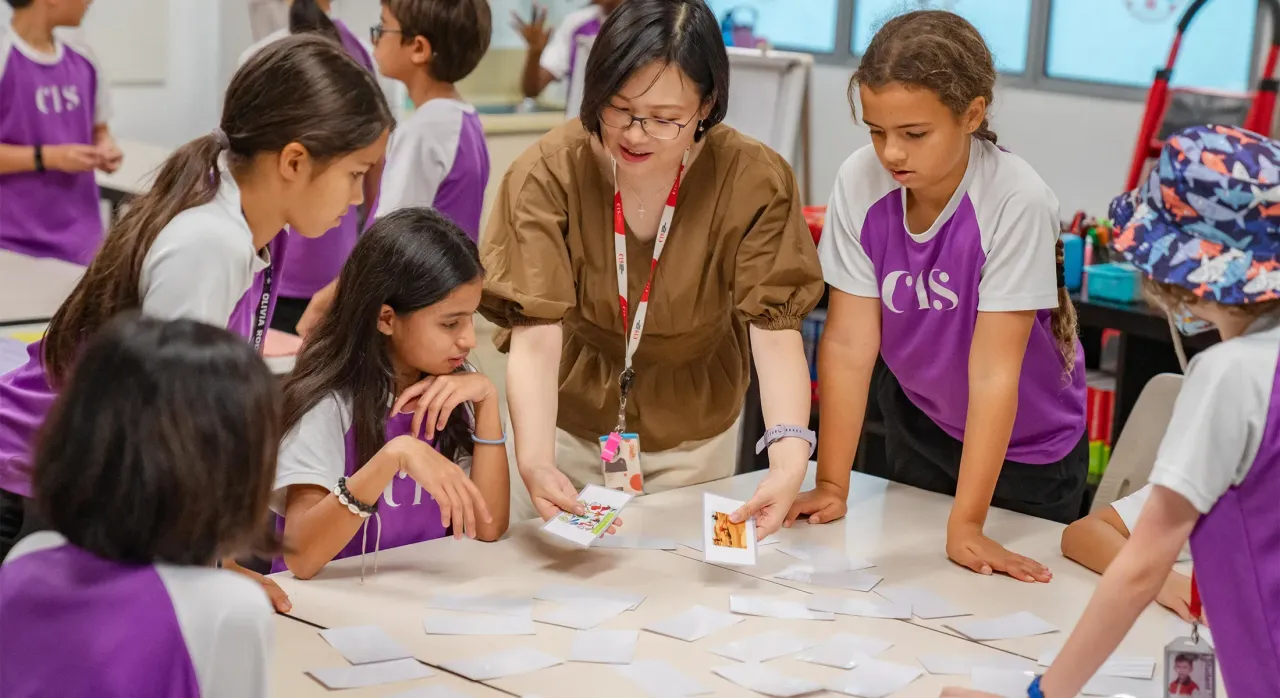
For instance, the Chinese–English bilingual programme at Canadian International School (CIS) in Singapore applies a 50:50 model from Pre-Kindergarten to Grade 6. Students alternate between English and Chinese instruction, with both languages used in their academic learning.
Mathematics is taught in both languages, giving students the chance to build subject-specific vocabulary while also learning to communicate ideas across both languages.
2. Myth: My child needs to speak the second language at home to become bilingual
Reality: A bilingual home environment can provide good exposure, but it isn't the only way children can learn a second language.
If you’re considering bilingual education for your child, you may worry if they can keep up in a language that isn’t spoken regularly, or at all, at home.
Regular exposure to languages definitely gives kids extra practice. However, language skills can also be built through interactions with teachers and classmates, reading, play and everyday experiences.
The important thing is having consistent, meaningful opportunities to use two languages, no matter what they may speak at home.
As parents, you don’t need to become language teachers yourselves, especially if you’re not fluent in your child’s second language. Simply support their learning by showing interest in the language, whether it’s by reading together, listening to stories and music, or asking them to teach you new words.
3. Myth: Learning two languages will make it harder for my child to learn other subjects
Reality: In a well-structured bilingual programme, language learning and academic learning can happen together.
Would spending time learning a second language mean your child will fall behind in subjects like science and English? After all, if a child is learning new concepts in an unfamiliar language, wouldn't that make schoolwork more difficult?
Don’t fret; a bilingual education doesn't mean sacrificing academic learning for language development. In fact, when a second language is incorporated into the curriculum, children can learn subject knowledge and language skills at the same time.
In fact, research shows that bilingual learning not only boosts a child’s language capabilities, but also their creativity, memory, and problem-solving skills.
A maths lesson in the French–English Bilingual programme at CIS, for example, introduces children to universal mathematical concepts while also helping them learn how to explain those concepts in another language. As a result, children develop not only their general vocabulary, but also the subject-specific language they need to communicate their thinking process.
4. Myth: Bilingual education is only for kids who are already fluent in both languages
Reality: Children can enter a bilingual programme with different levels of language proficiency.
Like many parents, you may assume that bilingual programmes are only for children who already speak both languages fluently.
You may worry that your child will struggle to progress if they are only a beginner in one of the languages, especially when using it in an academic setting.
The truth is that many children start bilingual education with very different language development and experiences. Some may speak both languages at home, while others may have had little exposure to one language but be fluent in another. These different starting points don't necessarily determine how well a child can perform in a bilingual programme.
The important part is whether the school’s bilingual environment meets students where they are and supports their progress. This can include differentiated instruction, appropriate reading materials, language support, and regular opportunities to practise the language in meaningful contexts.
At CIS, for example, our Chinese–English bilingual programme is tailored to both native and second-language Chinese speakers. Our students follow personalised reading pathways depending on their proficiency levels, while daily Chinese lessons with native Chinese-speaking educators help develop their language and literacy skills.
What should parents look for in a Bilingual Programme at International Schools?
Not all bilingual programmes in Singapore’s international schools are structured in the same way. Some may focus mainly on language learning for its own sake, while others integrate both languages as part of daily learning for other subjects too.
Here are a few questions worth asking during a school visit:
- How much exposure will my child have to each language? Ask how frequently students will hear and use both languages. Consistent exposure will help children build confidence and familiarity in multiple languages.
- How does the school support different levels of language proficiency? Children will likely enter a bilingual programme with very different language backgrounds. Ask how the school will assess their starting points and adapt learning to support their progress.
- How are literacy skills developed in both languages? Speaking and listening are vital, but bilingualism also means being able to read and write in both languages. Ask the school how students develop literacy in each language as they move through the programme.
- How does the bilingual pathway fit into the wider curriculum? A strong bilingual programme should complement a child's overall education. Find out how language learning integrates with the school's curriculum and academic pathways over the years.
At Canadian International School (CIS), your family can explore two distinct bilingual pathways:
- The Chinese–English Bilingual programme follows a 50:50 model from Pre-Kindergarten to Grade 6, with the pathway continuing through the IB Middle Years Programme and Diploma Programme to Grade 12.
- The French–English Bilingual programme is available from Junior Kindergarten to Grade 6 and is fully aligned with the IB Primary Years Programme.
The two programmes have their own approaches, but both aim to give every student meaningful opportunities to cultivate language proficiency alongside academic and personal growth.
Discover What Bilingual Learning Can Look Like
At CIS, bilingual learning is part of our broader commitment to developing internationally minded students who can connect ideas, people, and perspectives. Whether learning through the Chinese-English programme or the French-English programme, our students are encouraged to see language as more than a subject to master, but also a way to understand and engage with the world around them.
If you're considering a bilingual education for your child, we'd love to welcome you to our campus to learn more about our learning pathways.
Join one of our upcoming Open House events or book a personalised tour to experience our learning environment firsthand.
If you have any questions or are unable to attend one of our scheduled Open Houses, our team would be happy to connect with you or arrange a personalised campus tour.

Canadian International School