
1. About
1.1 VISION, MISSION AND CORE VALUES
Vision
Unleashing the potential of every individual so they can own their future.
Mission
Engage. Enlighten. Empower.
Our International Mindedness
CIS is a community of global citizens who through its mission actively embraces opportunities to make the world a better place for ourselves, others and the planet.
As a learning community:
We are ENGAGED with our community and our environment.
We are ENLIGHTENED through sharing about ourselves, others and the world.
We are EMPOWERED to take action.
Core values
- Collaboration
- Creativity
- Curiosity
- Generosity
- Respect
1.2 SCHOOL CULTURE
OUR STORY
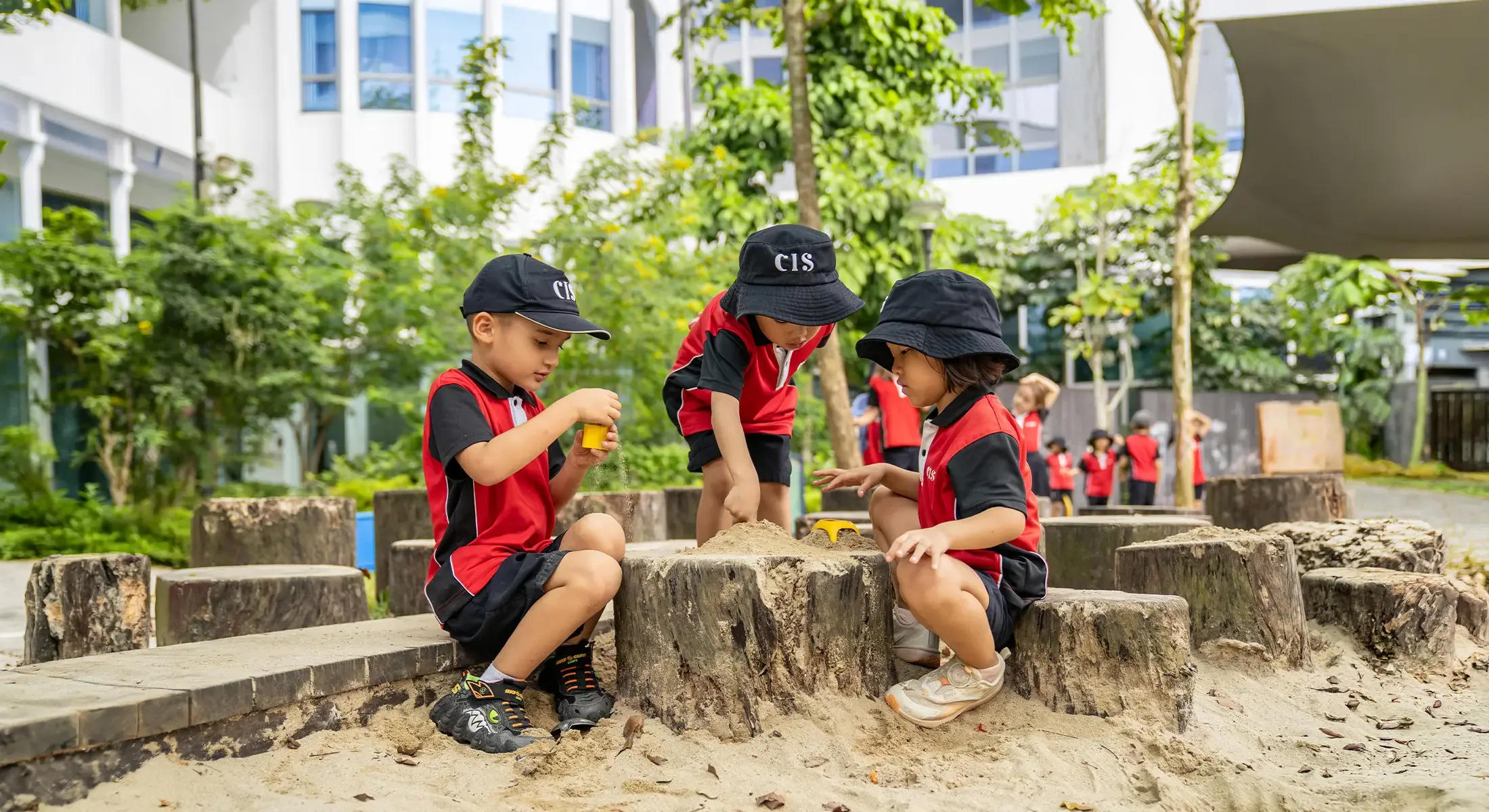
What will tomorrow look like for today’s student? They will work in jobs that don’t yet exist. They will tackle challenges we don’t yet understand. And they will experience opportunities we can’t yet imagine.
Our job is simple. We equip students with the knowledge and skills needed to adapt and navigate the world as it changes.
We believe those who will thrive in the future are those who can create connections, those with the ability to put things together.
They will connect theory and practice, people and places, collaboration and innovation, intention and action.
We instill the desire to question, to analyse and to explore.
We build the capability to create, to build and to implement.
To connect ideas in ways that push them forward.
To connect skills in ways that drive lifetime development.
To connect with people in ways that build understanding.
To connect to places in ways that will make the world their own.
This is what we empower our students to do.
To connect. To succeed. To thrive. To own the future.
1.3 SAFEGUARDING
CIS is committed to engaging parents as partners in safeguarding. As part of our commitment to safeguarding all parents entering the school are required to show their CIS identification and wear it at all times.
Opportunities to learn about how CIS safeguards and protects students from harm is communicated at school events, the safeguarding section of the school website, Communication bulletins, and through the schools social media channels.
1.4 CIS LEARNING PRINCIPLES
The CIS Learning Principles are the fundamental understandings that guide teaching and learning. They are the beliefs that we see as essential for fostering optimum learning in our classrooms.
- Learners need to feel safe, valued, and supported in order to learn.
- Learners progress along a developmental continuum.
- Learners are competent, creative, and full of potential.
- Learners construct knowledge, and co-construct knowledge through social interaction.
- Learning is optimised within stimulating and thoughtfully created environments.
- Learners develop and express their understanding in a variety of ways.
- Learners make the best progress toward their academic potential when they are challenged with high standards.
- Learning requires meaningful feedback and reflection.
- Dialogue is a primary process through which we construct knowledge.
- Engaging students in inquiry with a focus on conceptual understanding fosters lifelong curiosity and depth of learning.
- Learning is a process that comes with challenge and requires sustained effort, persistence and struggle.
1.5 ACADEMIC PROGRAMME
As an IB school, we follow the International Baccalaureate from pre-kindergarten to grade 12.
By grade, our programmes are:
- Pre-Primary Years Programme in nursery
- Primary Years Programme (PYP) in pre-kindergarten to grade 6
- Middle Years Programme (MYP) in grades 7 to 10
- Diploma Programme (DP) in grades 11 and 12 (commonly referred to as year 1 and 2)
- CIS Foundation Programme (see below)
CIS also offers a customized academic programme in grades 10 to 12 that combines AP courses within IB courses.
- AP Options in Grade 10
- Extended Programme (EP) in grades 11 and 12
1.5.1 International Baccalaureate programmes
"The aim of all IB programmes is to develop internationally minded people who, recognizing their common humanity and shared guardianship of the planet, help to create a better and more peaceful world."
(International Baccalaureate Organization 2007)
Building on the inquiry-based IB philosophy, students are encouraged to question, discover and communicate through an interdisciplinary and integrated approach to learning. The combination of highly trained teachers, a challenging, yet flexible curriculum and an individual approach to learning, allows students to develop to their full potential. The end result is a quality education for the international student. The goals and philosophy of the three IB programmes are consistent. The MYP naturally follows the PYP, and it also serves as excellent preparation for the IB DP. Visit ManageBac (MYP and DP Programmes only) and My.CIS for schoolwide curriculum information.
1.5.2 Nursery programme
Our nursery programme adopts the framework of the Early Years Foundation Stage Development Matters and is PYP inspired. It is both inquiry and play based focusing on developing foundational social, literacy and numeracy skills, as well as fine and gross motor skills.
1.5.3 CIS Foundation programme
The CIS Foundation programme is designed for students in grades 3 to 8. It is a rigorous two-semester programme that aims to swiftly equip each student with the necessary English skills (reading, writing, listening and speaking) so that they can successfully meet the expectations of CIS's curriculum. A specialized Foundation Programme for the first semester of Grade 9 is also available for eligible students.
1.5.4 Who to contact if you have programme or curriculum questions?
Please contact your child's teacher(s) if you have questions about our curriculum. You may also contact our IB and curriculum coordinators, and our divisional principals.
Name | Responsibility |
|---|---|
| Nick Dykes | PYP coordinator |
| Minbin Yan | Bilingual PYP coordinator |
| David Stewart | MYP coordinator (Grades 7 to 10) |
| Belize Kearin | IB DP coordinator (Grades 11 and 12) |
| Ashley Keohan | Extended Programme Coordinator |
| Zachary Walters | Educational Technology Coordinator |
| Dan Hartig | Head of the Academy of Music |
| Mat Jones | Head of Academy of Sports |
| Robert Brown | Assistant to Principal (Foundation) |
| Bilo Dia | Assistant to Principal (FEB) |
| Lily Zhang | Assistant to Principal (Kindergarten) |
| Juliane Herold | Assistant to Principal (Kindergarten) |
1.5.5 The International Baccalaureate (IB) learner profile
The Learner Profile Attributes are central to all IB Programmes at CIS. These are qualities that we hope will characterise all members of our school community. These attributes are taught and modelled by our teachers and staff, and are central to our evaluation of students’ progress. Visit the IB website for more information about the International Baccalaureate Programmes.
1.6 CLASS CONFIGURATION
Our school has a long-standing, thoughtful, deliberate and educationally sound process for creating optimal class lists each year. There are a host of factors we consider, information we discuss and data we evaluate in building final class lists.
This process involves the observations we have made across the course of the year, and conversations we may have had with parents throughout the year. As we consider the confidential information we have on students, and what will be optimal from a learning perspective, we don’t use further feedback from parents in the final placement decisions.
Our policy is that we respectfully but consistently decline any and all parental requests to change class configurations or teacher assignments at any stage throughout the year.
1.7 OUTDOOR LEARNING
Open Minds Programme
The Open Minds Programme provides Primary students (Grades 1 to 6) with three full days of immersive, outdoor learning experiences throughout the academic year. Rooted in a place-based learning approach, the programme connects students directly to real-world environments, allowing them to explore, investigate, and make meaning from the places around them.
Learning experiences are closely linked to both the school curriculum and the PYP Units of Inquiry, enabling students to deepen their understanding through authentic, hands-on engagement. By interacting with natural environments, local sites, and real-world contexts, students develop curiosity, critical thinking, and a stronger connection to their learning.
These experiences create meaningful opportunities for students to learn through active exploration, observation, and inquiry, making their learning both relevant and memorable.
Please contact your child’s teacher to learn more.
1.8 LANGUAGE ACQUISITION PROGRAMME
From pre-kindergarten to grade 6, students specialise in French or Chinese, while students in grades 7 to 10 specialise in English, French, Chinese or Spanish. Students will receive daily lessons (or equivalent) in the language chosen. You can view what is on offer on this page on our website. As indicated in the school’s terms and conditions of enrolment, parents are expected to commit to their child’s language choice for the entire school year. If parents wish to change their child’s language programme for the subsequent school year, they must notify the school by 1 March.
1.9 STUDENT SUPPORT AND WELLBEING SERVICES
English language learning
The English Language Learner programme (ELL), offered to English programme students in senior kindergarten (SK) to grade 10 and Chinese-English bilingual (CEB): ELL grade 1 to 3 / French-English bilingual (FEB) students in grades 1 to 3, develops a student's English language proficiency needed for academic success in all subject areas. Participation in the English Language Learner (ELL) programme is mandatory, if, after student assessment, CIS is of the view that the student requires support. For students in PYP, students who receive ELL support would not be required to take an additional Language Acquisitions subject.
Learning Support
Learning support helps students meet the demands of the IB curriculum. When internal or external assessments indicate a need for intervention—including tiered academic support, behavior support, or external therapies—CIS will formally recommend the appropriate program.
While these services are designed for student success, parental participation is a partnership. Should parents choose to opt out of recommended support, a "Declining Services Against Recommendation" form must be signed and filed. To maintain professional standards, all external observations or services must be authorized in writing by CIS. All reports and references remain strictly confidential and are shared directly between the school and consultants.
View our learning support policy here.
Pastoral care and Counselling
School counsellors are members of the CIS professional staff and work collaboratively with teachers, administrators, and student support teams to promote student wellbeing, safety, and social-emotional development.
For further details about the CIS Counselling Programme, families may refer to the school’s Pastoral Counselling Programme document in MyCIS.
Role of the School Counsellor
Counsellors may work with any student at CIS at various points during their schooling. This may include:
- brief check-ins or individual conversations in response to immediate needs
- proactive classroom-based lessons or discussions, in collaboration with classroom teachers
- short-term support related to social, emotional, or well-being concerns
- consultation with staff to support student wellbeing
- responding to safeguarding or child protection concerns
Not all counselling interactions are ongoing or formal in nature; many involve brief, supportive conversations that help students regulate, problem-solve, or access appropriate support. In many cases, counselors respond to low-level social, emotional, or behavioural concerns in ways similar to classroom teachers as part of the school’s broader pastoral support for students.
Counsellors may also meet briefly with students as part of day-to-day pastoral care and wellbeing support within the school environment.
As part of a school’s pastoral care approach, students may occasionally speak with a counsellor in the same way they might speak with a teacher or trusted adult for guidance or support. These brief interactions are considered part of the school’s normal wellbeing support and do not necessarily indicate that a student is receiving formal counselling services.
Communication with Parents
In many cases, counsellors work with students as part of the school’s day-to-day duty of care and wellbeing support. Parents may not be contacted prior to every interaction between a counsellor and a student.
Parents will be contacted when:
- ongoing or planned counselling support is recommended
- concerns arise that significantly impact a student’s wellbeing, learning, or safety
- follow-up or collaborative support with families is needed
Student Safety and Safeguarding
If a student discloses concerns related to their safety or the safety of others, including self-harm, harm from others, or other child protection concerns, the counsellor is required to respond immediately in accordance with the school’s Safeguarding and Child Protection Policies.
In these situations, the counsellor’s first responsibility is to ensure the immediate safety of the student. Parents or guardians will be contacted as soon as appropriate once the school has ensured that the student is safe and the situation has been initially assessed.
Confidentiality
CIS respects student confidentiality while also balancing this with our professional and legal responsibility to act when a student’s safety or well-being may be at risk. Information is shared on a need-to-know basis with appropriate staff and external organisations to ensure student support and safety.
Our Commitment
CIS is committed to providing a safe, supportive, and responsive environment for all students. Counselling services are an integral part of this commitment and are designed to support students proactively, responsively, respectfully and in partnership with families.
1.10 LIBRARY SERVICES
The CIS library focuses on providing supportive services and programme collaboration. Global information literacy and literature that reflect our multicultural school community are integral to active, authentic life-long learning and inquiry.
Our library staff provide a wide variety of resources that are appropriate for the range of age and language abilities of our students, mindful of the diverse, multicultural population, and support the IB curriculum that is taught in our classrooms. The library is a changing and dynamic place and is an intrinsic part of the busy daily life of the CIS community.
This document contains information about accessing the following library services:
1.11 DIGITAL LITERACY
As a Common Sense Digital Citizenship certified school, we educate students to use their devices safely and responsibly. Students must ensure the security of their devices at all times and the school will not accept responsibility for loss or damage to these often expensive items. Read more about our iPad programme and MacBook requirements on the digital literacy page of our website as well as Device Use Policy.
1.12 ACADEMY OF SPORTS
Across Junior and Senior School, more than 1,200 student athletes participate in CIS athletics each year.
Students compete as CIS Huskies across a wide range of sports, developing confidence, leadership, teamwork, resilience, and healthy habits that support lifelong wellbeing. Read more about the Academy of Sports on our website.
1.13 ACADEMY OF MUSIC
The Academy of Music at CIS is a performance-based programme designed to ignite a passion for music in students, teachers, and parents. From private instrumental coaching to full orchestral performances, the Academy fosters a vibrant culture of musical exploration and community involvement. Read more about the Academy of Music on our website.

Canadian International School
Follow us