Progress Over Pace: Rethinking English Instruction for Diverse Learners
By Pritika Chandiramani, Early Years teacher
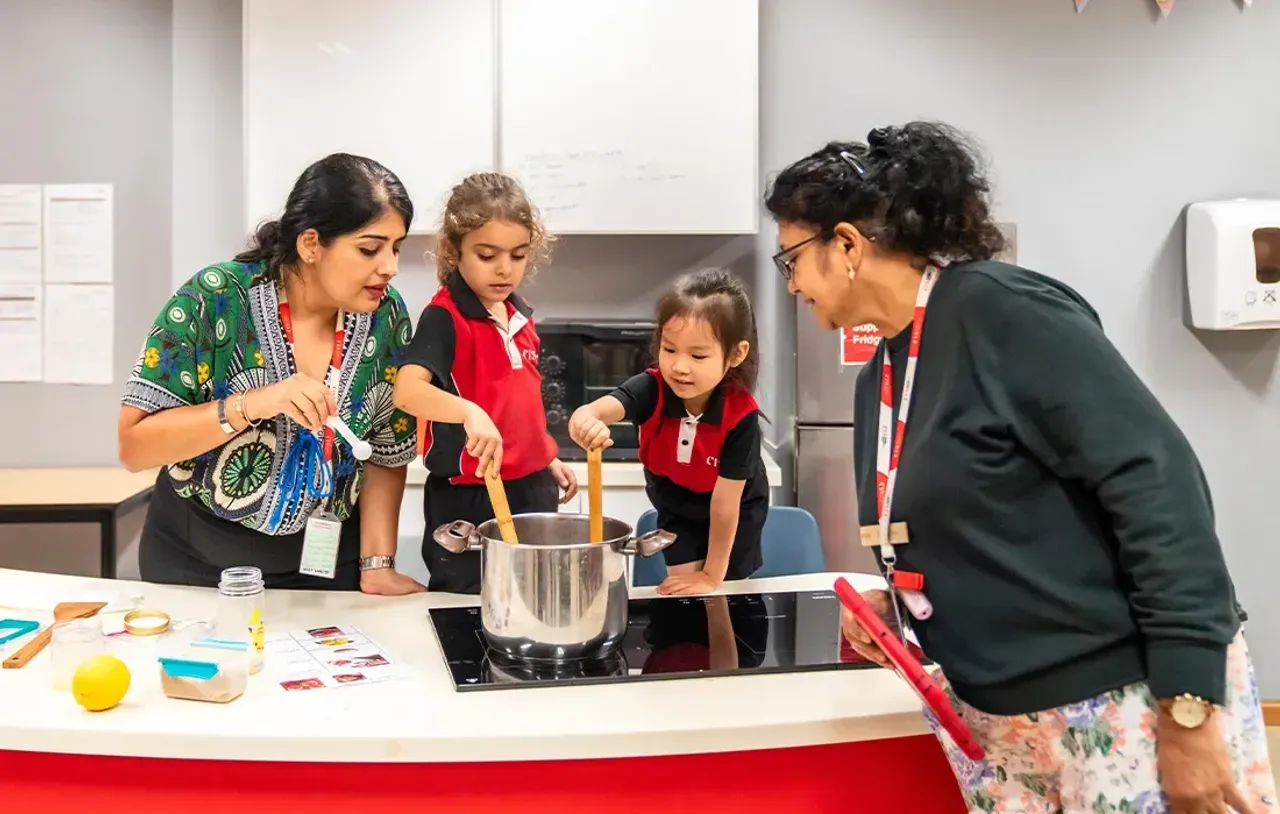
Walk into an Early Years classroom in an international school, and you hear a tapestry of languages. At the Canadian International School (CIS) Singapore, this linguistic diversity is a strength. Yet it raises a critical question: How do I help young learners build confidence in English when each child arrives with different language experiences?
For bilingual and multilingual (BML) learners, English acquisition is not a straight line. Some children speak quickly; others observe quietly before joining in. As an Early Years educator in the IB Primary Years Programme (PYP), my role is not to accelerate everyone at the same speed, but to ensure each child progresses along their own path. In other words, we shift focus from pace to progress.
Meeting Learners Where They Are
Differentiation begins with a simple idea: meet learners where they are. Carol Ann Tomlinson describes responsive teaching as adapting to students’ readiness, interests, and learning profiles. In Early Years, this aligns naturally with the inquiry-based PYP, where learning is shaped by curiosity and agency.
In a multilingual classroom, English proficiency varies widely. Some children are fluent; others are encountering English for the first time. Rather than seeing differences as gaps, we see them as starting points.
During a unit on communities, we explored: How do people communicate? In a storytelling activity, one child narrated an entire picture book in English. Another, still building confidence, used puppets to act out key moments while saying a few words. A third quietly arranged story sequence cards and pointed to images when asked. Each demonstrated understanding differently, yet all engaged meaningfully with language.
Understanding the Language Journey
To support BML learners, educators must understand how language develops. Jim Cummins distinguishes between Basic Interpersonal Communicative Skills (BICS), which refers to conversational language that children often acquire relatively quickly, and Cognitive Academic Language Proficiency (CALP), the more complex language needed to explain ideas, ask deeper questions and engage in academic thinking. CALP can take several years to develop.
This distinction helps teachers maintain realistic expectations. A child who seems fluent at lunch may still need support to express more complex thinking in the classroom. Cummins also highlights the importance of the home language. Skills such as storytelling, vocabulary and conceptual understanding transfer across languages. In practice, this means celebrating and strengthening home languages rather than setting them aside.
Learning Through Social Interaction
Language develops most powerfully through interaction. Lev Vygotsky’s Zone of Proximal Development describes the space where a learner can do more with guidance than alone. In Early Years, teachers support this through modelling, questioning, and collaboration.
During block play, two children build a city. One explains, “This is the hospital.” Another, still learning English, gestures and says, “Tall... building.” The teacher responds: “Yes, that’s a very tall building. It looks like a skyscraper. Who works inside a skyscraper?” By extending vocabulary and modelling sentence structure, the teacher provides scaffolding while maintaining play. Over time, small interactions accumulate into significant growth.
Supporting the Silent Period
Many multilingual learners experience what Stephen Krashen calls a silent period when first encountering a new language. Children listen and observe without speaking much. While this can concern adults, it is natural and productive. Learners absorb vocabulary, patterns, and meaning before feeling ready to speak.
Teachers look for progress beyond spoken words. One student spent weeks observing during morning meetings. She followed instructions, pointed to visual schedules, and smiled at familiar phrases. Then one day, discussing animals, she raised her hand and said, “Butterfly... fly away.” The sentence was simple, but it marked a moment of confidence and linguistic risk-taking.
Creating a Language-Rich Classroom
Lilian Katz emphasised that young children learn best through meaningful experiences, not isolated drills. This means embedding language throughout the daily environment.
In a language-rich classroom, communication is supported by visual schedules, labelled materials, gestures, real objects, hands-on experiences, and collaborative play. During an inquiry into plants, students grew beans in clear containers and documented observations through drawings and discussion. One child described roots as “like little strings.” Another added, “The roots drink water.” For emerging English learners, planting and touching soil provided context for vocabulary like roots, stem, and leaves. Language grew alongside the inquiry.
Differentiation in Practice
Differentiation in Early Years does not mean separate lessons for each learner. Instead, teachers provide multiple pathways for engagement and expression. During literacy centres, children may listen to stories, retell them with puppets, draw and dictate their own narratives, match pictures and words, or act out scenes in dramatic play.
These varied approaches allow children with different language abilities to participate meaningfully together. Peer interactions are also powerful. When children are paired strategically, they learn through collaboration and natural language modelling.
Partnering with Families
Families are essential partners. Some parents worry that speaking their home language might slow English acquisition. Research consistently shows the opposite. Maintaining the home language strengthens cognitive development, identity, and family relationships.
Encouraging parents to read stories, sing songs, and have rich conversations in their strongest language provides a solid linguistic foundation. When children see their languages valued in the classroom, through greetings, books, and cultural celebrations, they feel a stronger sense of belonging. That belonging is central to both well-being and learning.
The IB Learner Profile in Action
Supporting multilingual learners nurtures many attributes of the IB Learner Profile. As students grow in confidence, they become communicators, sharing ideas and listening to others. They develop open-mindedness, recognising that people express themselves differently across cultures. Language learning becomes more than acquiring English. It helps children understand that language is deeply connected to identity, culture, and perspective.
Progress Over Pace
In the Early Years, learning unfolds gradually through exploration, relationships, and meaningful experiences. When educators prioritise progress over pace, they create classrooms where every learner feels valued and capable. Some children will quickly find their voice in English; others will take more time to build confidence. What matters is that each child continues moving forward.
As teachers, our responsibility is not to determine how fast children learn, but to design environments that support curiosity, encourage risk-taking, and celebrate growth. By meeting learners where they are, valuing multilingualism, and embracing differentiated instruction, we empower bilingual and multilingual learners to thrive, not only as English speakers, but as confident communicators in an interconnected world.

Early Years teacher
Author Biography:
Originally from India, Pritika began her teaching career as an assistant teacher at an International School where she realised her passion for teaching and learning. With over 28 years of teaching experience, Pritika has built a rich and diverse portfolio for herself, evolving from a classroom teacher into key leadership roles such as Middle Leader, PYP Coordinator and Vice Principal. Pritika’s approach to meaningful teaching is rooted in her strong belief in the power of interpersonal relationships. She is committed to creating an inclusive and respectful environment where students feel seen, heard, and valued, enabling them to grow both academically and emotionally. Pritika continuously strives to advance her mission of fostering meaningful, student-centered learning.

Canadian International School