
Living a sense of place
By Joseph John Teft, Grade 5 and Grade 6 teacher
Schools often speak about global citizenship, yet many students move through their education without ever developing a meaningful connection to the places they inhabit. Developing a sense of place should not remain an abstract idea; it should be lived. Research consistently shows that students’ engagement, identity formation, and willingness to be courageous, both academically and socially, are shaped by how connected they feel to the places where they live and learn. When learners feel a genuine connection to their environment, learning becomes meaningful, relational, and purposeful. When that connection is missing, learning can become transactional, compliance driven, and disconnected from lived experience.
This is particularly visible in international school contexts. Many students move frequently across countries, cultures, and communities. While these experiences can offer rich opportunities for global understanding, they can also create feelings of dislocation and impermanence. When schools unintentionally function as non-places, spaces without personal, cultural, or environmental meaning, students may struggle to develop a sense of belonging. In these contexts, school can feel like something to get through rather than a place to invest in.
In response to this, educators have a responsibility to intentionally cultivate a sense of place. Ina Ter Avest and Bakker(2017) show that when learners develop a relationship with their surroundings, they experience increased belonging, stronger agency, and deeper emotional investment in both their learning and their sense of home. Place becomes something they care for rather than something they pass through. This often leads to meaningful action as well as relationships.
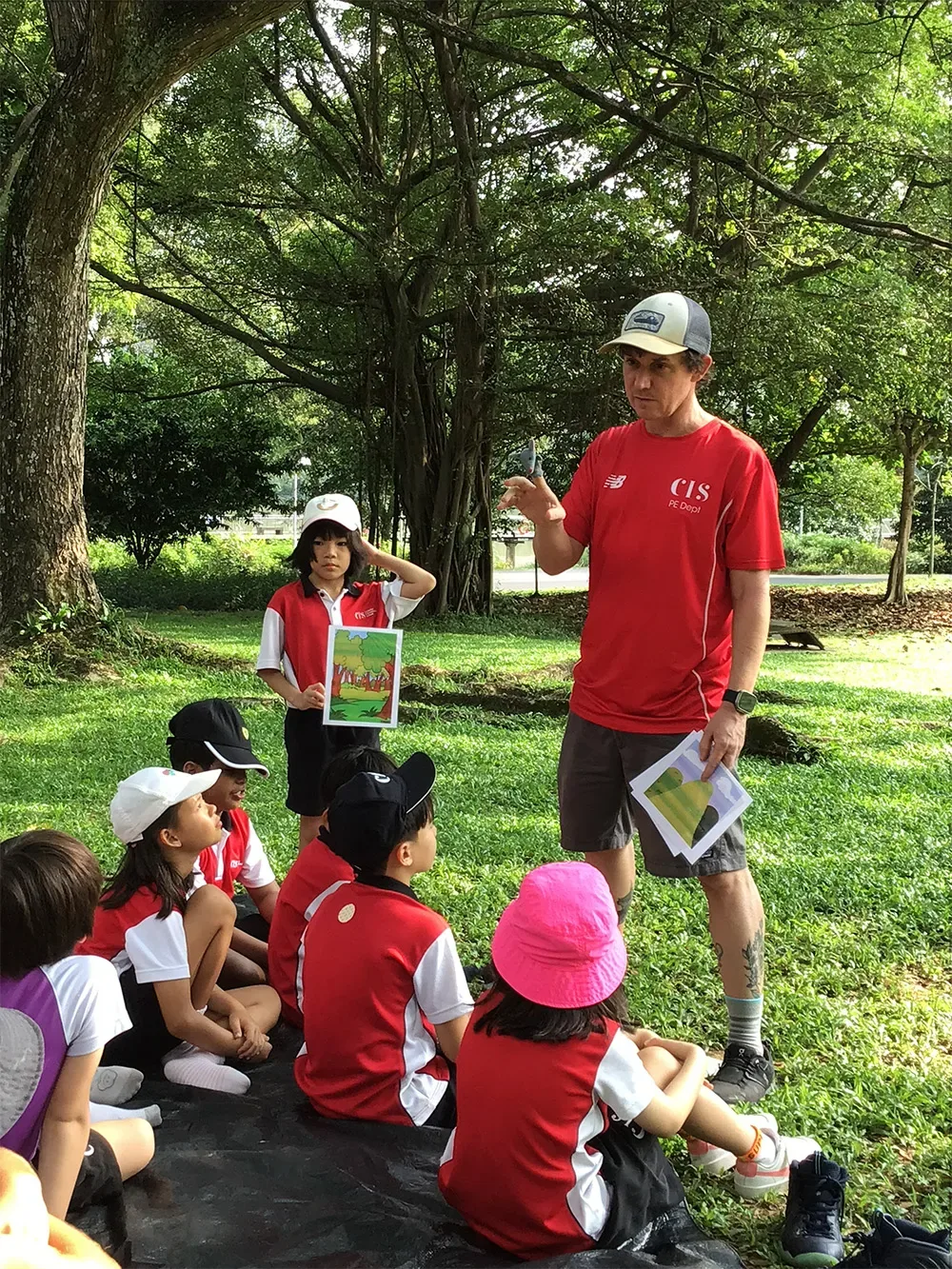
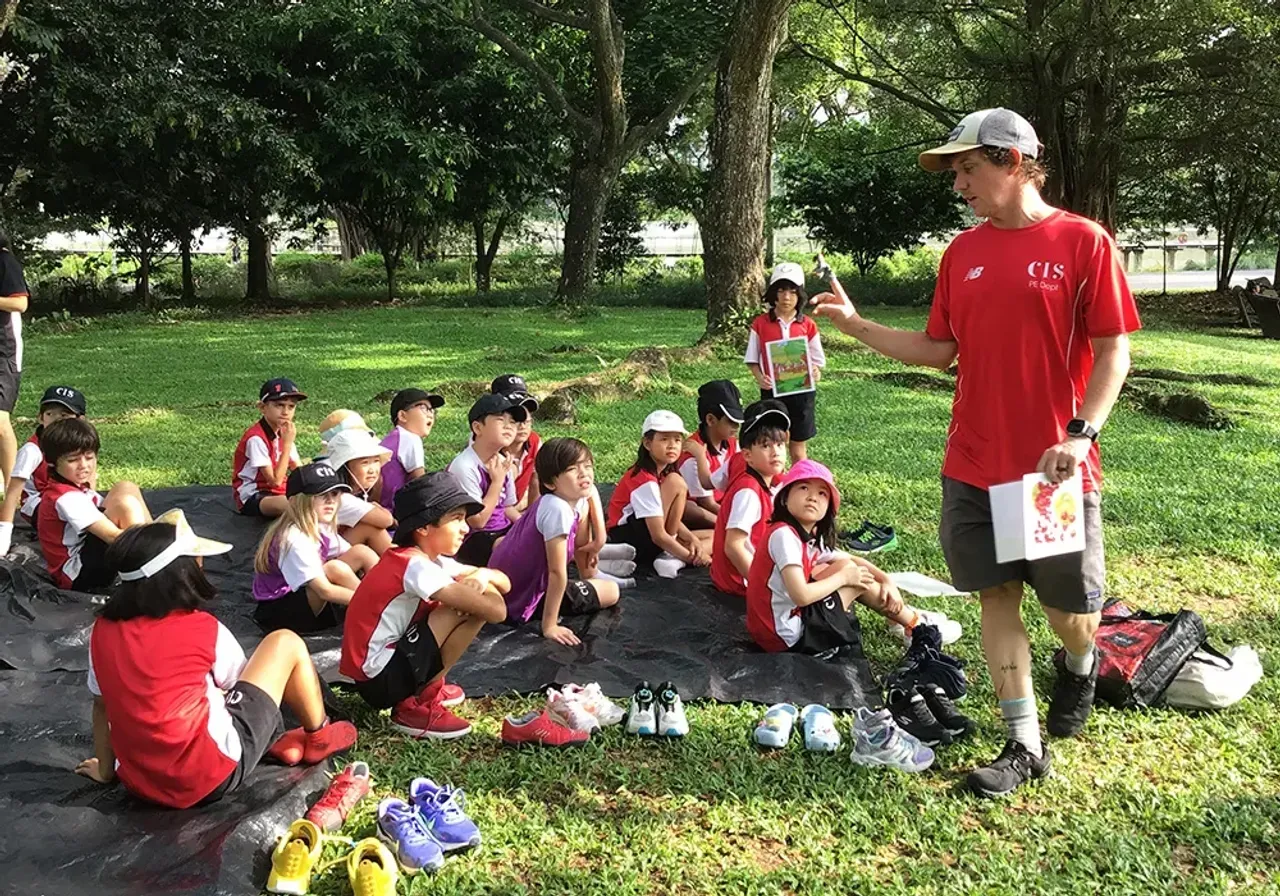
As an Open Minds teacher, we used Place Based experiences to connect students to Singapore. In places like Sungei Buloh, the Singapore Zoo and the Urban Redevelopment Authority, we invite students to slow down, observe carefully, and notice what is often overlooked. By engaging with the local environment, students begin to see learning as something that exists beyond the classroom walls. As a classroom teacher, I use magic spots (picking a spot to sit in over the year to notices changes) and storytelling to create connections to Singapore. In this way, data becomes dynamic rather than static. Problem solving becomes something they practise daily rather than a task reserved for worksheets. Learning shifts from abstraction to action.
These experiences also support the development of shared values within our school community. Curiosity is nurtured when students are encouraged to ask questions about the world around them. Generosity grows as students learn to care for shared spaces and each other. Respect develops through listening to the stories and perspectives that shape a place. Collaboration becomes necessary when students work together to understand and respond to real world challenges. In this way, a sense of place supports not only academic learning, but the development of the whole child.
Identity formation is a crucial focus during the elementary years. CIS invests significant time and energy into helping students understand who they are and who they are becoming. Developing a sense of place is a critical part of this process. Ferguson (2011), Semken & Freeman (2008) and Smith (2014) suggest that identity is shaped through repeated interactions with environments that matter to individuals, including homes, schools, and natural spaces. These places provide context for meaning making and self understanding. The more we are able to make meaning for ourselves, the more likely we will take action in the larger community to make our world a better place.
When places that are meaningful to students are acknowledged and brought into the learning environment, students are more likely to feel seen and valued. Learning becomes a shared experience rather than an imposed one. Conversely, when places are ignored or marginalised, some members of the community may feel isolated or invisible. This is especially important in diverse school communities where students’ relationships to place may differ significantly.
In this sense, rather than anchoring identity to a single location, sense of place becomes a way of understanding ourselves and our relationships. It allows learners to reflect on who they are, where they are in place and time, and how the world works. This approach aligns closely with our transdisciplinary units of study, and it encourages learners to consider both local responsibility and global impact.
For our community, developing a sense of place carries important ethical implications. Stevenson (2011) and Smith (2014) suggest that sustained care for environmental and social systems does not emerge from learning isolated facts and figures. It develops through meaningful relationships with particular places. When learners form connections to their environment, they are more likely to see themselves as responsible participants rather than passive consumers. This shift is critical in addressing the environmental and social challenges facing our world.
By moving from passive observer to active participant, students begin to understand that their actions matter. They recognise that caring for a place involves responsibility, reflection, and sometimes difficult choices. This understanding supports long term engagement rather than short term compliance. It also fosters hope, as students see themselves as capable of contributing positively to their communities.
Using a sense of place learning strategies shapes how we understand knowledge, how we locate ourselves in the world, and how confidently we are able to act. Learning becomes situated, relational, and purposeful. For us as teachers, this requires attentiveness and intention. Paying attention to place is not about nostalgia or romanticising the local. It is about recognising complexity, honouring diverse experiences, and creating learning environments that support belonging and agency.
As teachers, we are always teaching from somewhere. By acknowledging and engaging with place, we strengthen our ability to support learners in developing identity, responsibility, and connection. In doing so, we create learning experiences that extend beyond the classroom and prepare students not just to succeed academically, but to care deeply about the world they inhabit, then to act and create positive change in our communities. In a world where people are consistently being distracted we need these practices to anchor ourselves, otherwise we risk our future leaders being inattentive and uncaring.

Grade 5 and Grade 6 teacher
Author biography:
Joe is from Canada and has brought rich international experience since joining CIS in 2014, helping students explore diverse perspectives and new ideas with confidence. He holds a Master’s in Environmental Education and Communication and has taught in Australia, Korea, Kuwait, Cambodia, and Singapore. He is passionate about connecting learning to the real world, guiding students through robotics challenges, ecosystem investigations, and urban green space mapping. Every lesson is designed with purpose, helping students see how their learning can make a difference.
Joe believes in “learning by doing and learning by being,” building strong relationships and tailoring learning to individual strengths while fostering curiosity, critical thinking, and confidence in every student.

Canadian International School