Language matters: Developing academic language through classroom teaching
By Deborah Jones, Grade 8 Level Lead
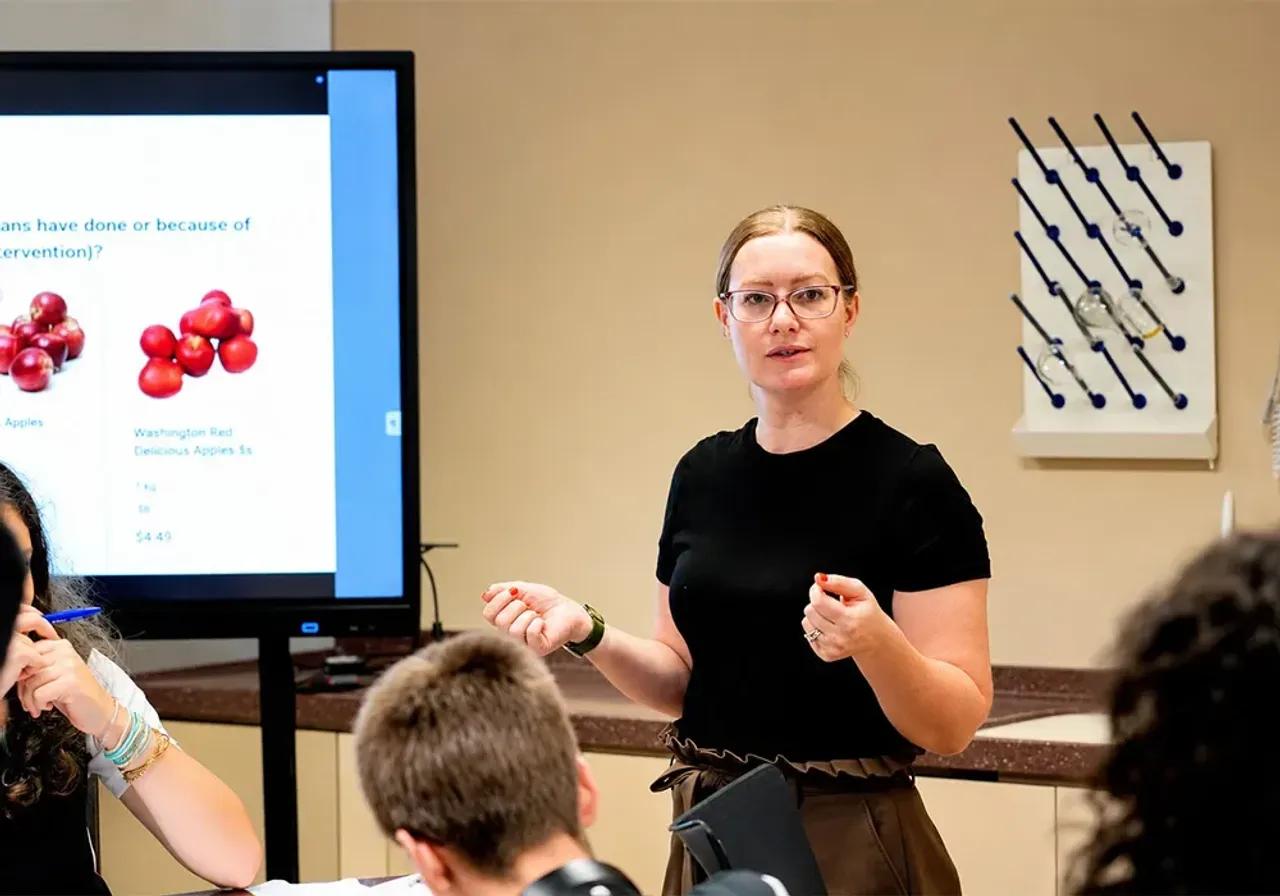
Whether a student is a native English speaker or a multilingual learner, the development of academic language is a continuous journey - one that underpins success as learners transition from the MYP to the DP and beyond.
The development of Cognitive Academic Language Proficiency (CALP) must be embedded within a meaningful context. This context is most effectively provided by subject specialists. As such, all teachers must recognise their role not only as content experts, but also as teachers of language within their discipline (Jim Cummins, 2000).
As a Science teacher, I often found that practical, classroom-based strategies for developing academic language were limited. Too frequently, available approaches were rooted in complex theory or required lessons to be designed entirely around language objectives. This created a false dichotomy - either teach content, or teach language, rather than integrating both. This aligns with research emphasising that language development is most effective when integrated within subject-specific instruction rather than taught in isolation (Pauline Gibbons, 2015). Through my Master’s in Education, I focused on identifying best practices that support both native English speakers and multilingual learners. My goal was to translate research into simple, actionable strategies that any subject teacher can implement without compromising subject depth.
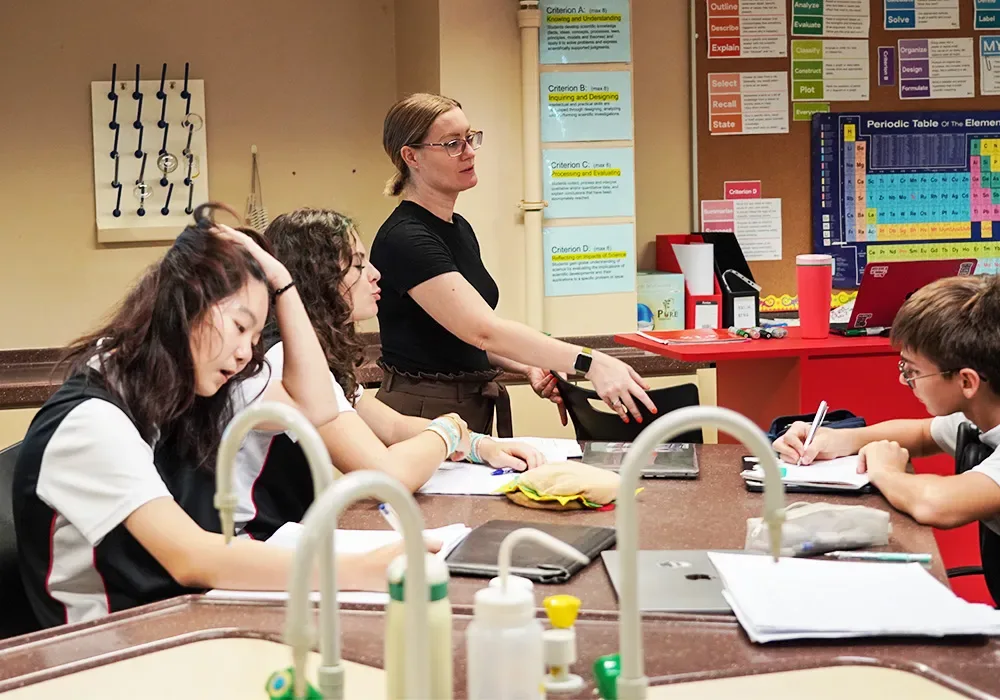
These are three key principles that emerged.
1. Understand the Three Tiers of Vocabulary
Academic vocabulary can be broadly categorised into three tiers (Isabel Beck, Margaret McKeown & Linda Kucan, 2013):
- Tier 1 – Everyday conversational language
- Tier 2 – High-frequency words with multiple meanings depending on context
- Tier 3 – Subject-specific, technical vocabulary
Students typically develop Tier 1 vocabulary through foundational programmes or targeted language support, with limited direct responsibility placed on subject teachers.
In contrast, teachers often focus heavily on Tier 3 vocabulary - the technical language of the discipline. In Science, for example, this includes terms such as chromatography, mitochondria, and photosynthesis. These terms are essential and require explicit instruction, but they occur relatively infrequently.
A common blind spot, however, lies in Tier 2 vocabulary. These words may appear simple but are often highly context-dependent and used frequently across subjects, making them particularly challenging.
Consider the word cell. In biology, it refers to the basic unit of life; in physics, it may relate to electrical systems; in computer science, it could describe a spreadsheet component; and in global politics, it might refer to a small, organised group. Students are often expected to navigate these shifts in meaning independently, without explicit instruction.
Research highlights that these “general academic words” have a significant impact on comprehension and academic success (Averil Coxhead, 2000). By intentionally teaching Tier 2 vocabulary, we provide powerful support for all learners - regardless of their language background.
2. Front-Load Vocabulary - But Keep It Simple
Front-loading vocabulary is essential, but it must be efficient and purposeful. When definitions are highly context-specific, asking students to independently locate accurate meanings can be both time-consuming and ineffective.
Instead, provide students with clear, context-appropriate definitions and ask them to identify the correct term. This can be further scaffolded using structured word banks. This approach reduces cognitive load while maintaining conceptual focus.
It is also important to consider the demands placed on multilingual learners beyond the classroom. Homework tasks can take significantly longer for these students. Rather than assigning work based on completion alone, consider setting time-based expectations. Encouraging students to work within a defined time frame can support better time management and reduce unnecessary stress.
3. Use Signposts, Gestures, and Visuals to Support Meaning
Learners process language at different speeds and in different ways. Additionally, teachers bring varied accents, speech patterns, and levels of pace - often accelerating when discussing topics they are passionate about. Being mindful of this is key.
Simple strategies can significantly enhance comprehension:
- Maintain eye contact to check for understanding
- Speak clearly and at a measured pace
- Avoid culturally specific idioms (e.g. “pull your socks up”)
- Use gestures to reinforce meaning
- Visually map ideas on the board, showing logical progression
- Keep written language concise, supported by prompts and images
These approaches create multiple entry points for understanding, allowing students to engage with content at a pace that suits their needs.
I have explored and trialled a wide range of strategies in my classroom. The approaches outlined here have been selected not only for their effectiveness, but for their simplicity. They are practical, adaptable, and - most importantly - beneficial for every learner in your classroom.
Deborah Jones is the Grade 8 Lead at Canadian International School. She is a Science educator and Chemistry specialist with 16 years of teaching experience in the UK, China, and Singapore.
Deborah is passionate about inclusive education and supporting diverse learners. Her master’s research focused on strategies to help multilingual learners succeed in mainstream classrooms.
She is a qualified TESMC (Teaching ESL Students in Mainstream Classrooms) teacher trainer through Lexis Education. She has led professional learning workshops for international educators. She has also presented at the ECIS Multilingual Learning Conference and the United World Colleges English Language Learners Conference.
In addition to teaching and leadership, Deborah leads student sustainability and leadership projects. She helps students develop agency, empathy, and a sense of community impact.

Author biography:
Deborah Jones is the Grade 8 Lead at Canadian International School. She is a Science educator and Chemistry specialist with 16 years of teaching experience in the UK, China, and Singapore.
Deborah is passionate about inclusive education and supporting diverse learners. Her master’s research focused on strategies to help multilingual learners succeed in mainstream classrooms.
She is a qualified TESMC (Teaching ESL Students in Mainstream Classrooms) teacher trainer through Lexis Education. She has led professional learning workshops for international educators. She has also presented at the ECIS Multilingual Learning Conference and the United World Colleges English Language Learners Conference.
In addition to teaching and leadership, Deborah leads student sustainability and leadership projects. She helps students develop agency, empathy, and a sense of community impact.

Canadian International School