Connecting Water to Land: The Integrated Movement Ecosystem
By Jorge Aguiar Esteban, Integrated Movement and Learning Early Years Teacher
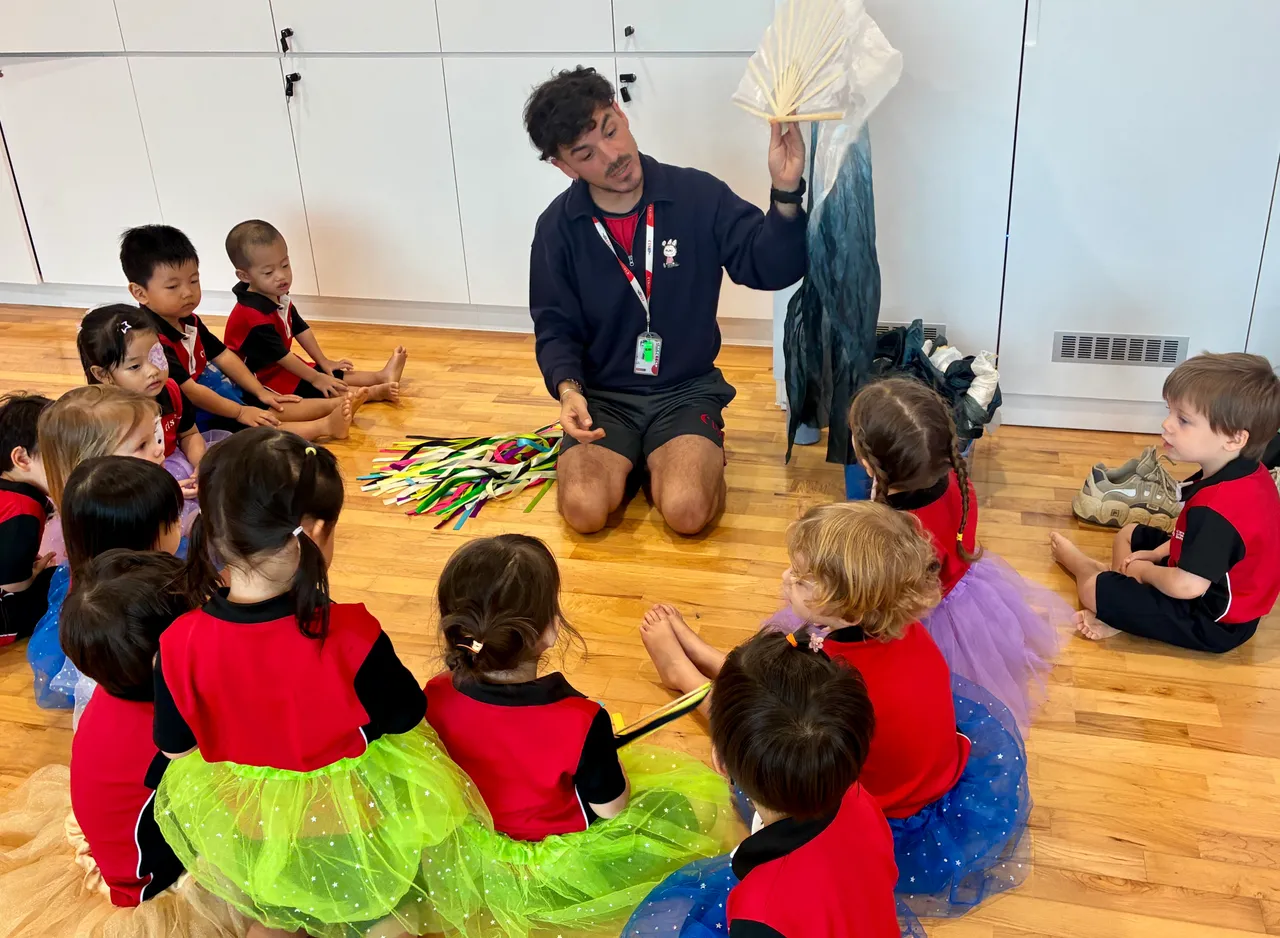
At CIS, physical expression has always been a core part of how we teach. Through our Move to Learn programme (which draws from the Smart Moves Perceptual Motor Programme) students constantly challenge and develop their spatial awareness, core strength, vestibular systems and overall readiness to learn. On the gym mats, they discover how their bodies anchor to the earth, learning to cross the midline and master gravity.
This year, we wanted to push those physical foundations further. We decided to intentionally bridge what they were doing on land with our Swim to Learn programme - which draws from the Austswim water safety philosophy.
We’ve always known that the pool is about much more than just water safety; it’s a brilliant, dynamic environment for exploring entirely new dimensions of motion. In the water, gravity shifts and children experience buoyancy, hydrodynamic resistance, and a freedom of movement that dry land simply can't replicate. The gliding, reaching, pulling, and floating patterns they practice in the pool do more than build physical endurance, they teach children how to fully extend their limbs, regulate physical tension, control their weight, and build an immense sense of confidence in what their bodies can do.
As the Integrated Movement and Learning Teacher, my favorite part of this journey was watching those aquatic and perceptual discoveries come back ashore through Dance to Learn.
Movement is a continuous language, and children are incredibly fluid at translating it from one environment to the next. When we moved into the dance studio to learn through our Dance to Learn programme or choreograph our musical, the studio floor became our new ocean, a lush rainforest, or the perfect patch of soil for seeds to grow. I watched our students beautifully translate the fluid, sweeping arm strokes they perfected in the pool into their choreography. They brought the memory of water resistance onto the land, using it to give weight and deliberate grace to their gestures. A simple arm movement became a powerful tool to express abstract concepts like the heavy rolling of ocean waves or the gentle drift of the wind.
By connecting these three programmes, we truly closed the loop on physical literacy. If Move to Learn and Swim to Learn give our students a robust physical vocabulary, Dance to Learn gives them the grammar and the stage. It offers them a creative voice to use those physical tools to communicate, feel, and share their inner worlds with our community.

Canadian International School