Bridging Pathways: Designing Vertical Computer Science Programs
By Ruchika Dutt, AP Computer Science Principles & IB DP Computer Science Teacher

Some of the best opportunities in education sit in the spaces between programmes.
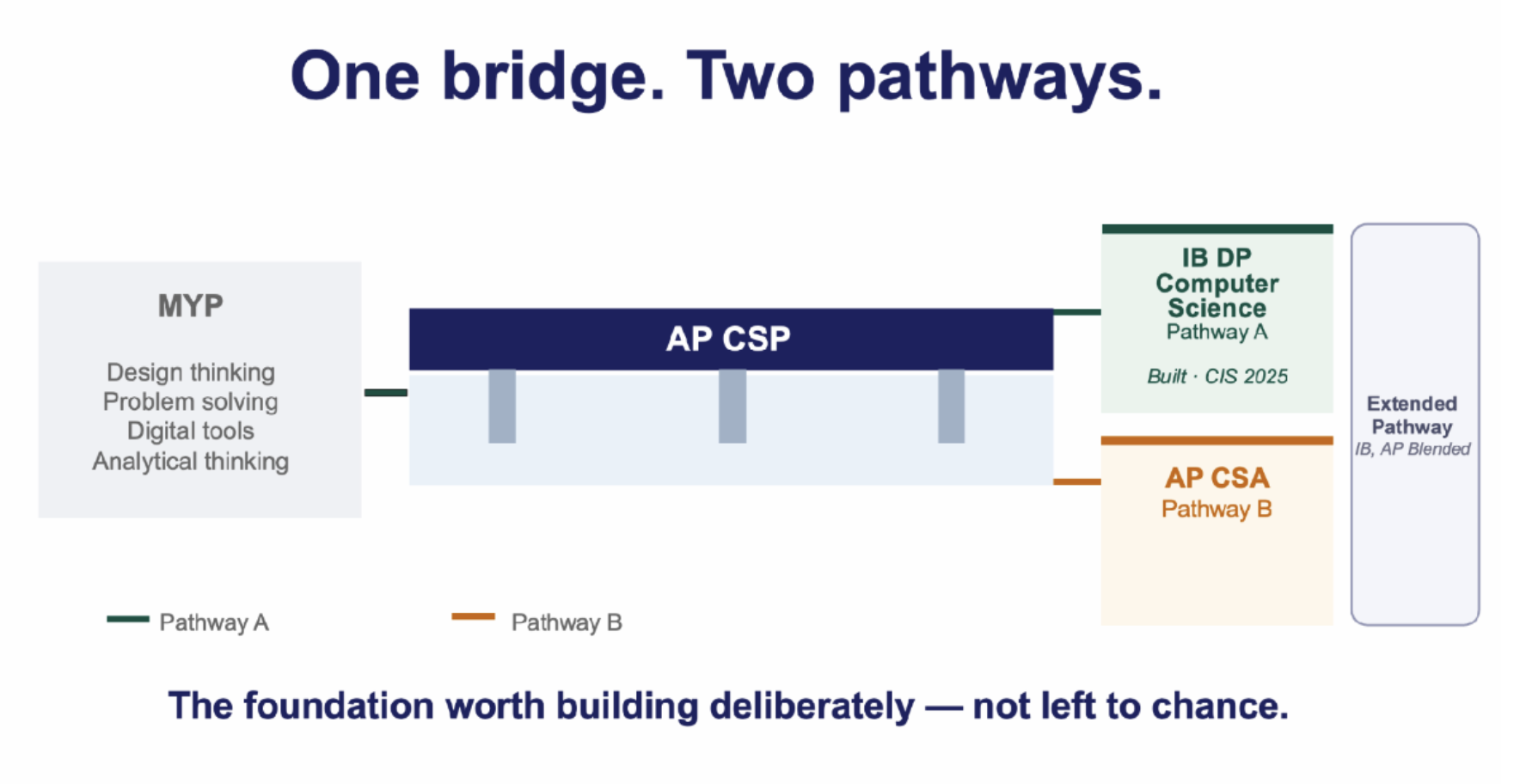
The IB Middle Years Programme (MYP) at Canadian International School spans Grades 7 to 10, providing students with a strong foundation in design thinking, problem solving, digital literacy, and analytical reasoning. From this foundation, students typically progress to one of two rigorous pathways: AP Computer Science A or IB Diploma Programme (DP) Computer Science. Both courses provide excellent preparation for university study and future careers in computing and technology. However, the greatest opportunity lies in intentionally designing a pathway that bridges the MYP with these advanced courses, ensuring students develop the knowledge, confidence, and computational thinking skills needed to transition successfully into either programme.
This July, I had the privilege of presenting this progressive pathway at the College Board AP Annual Conference 2026 in Las Vegas, one of the largest professional learning gatherings for AP educators worldwide. The session, “Bridging Pathways: Designing Vertical Computer Science Programs,” shared how to intentionally bridge this space between MYP and these destination courses, which AP Computer Science Principles does successfully. AP Computer Science Principles successfully bridges this gap. The course provides a strong transition between the foundational skills developed in the MYP and the more advanced study offered in AP Computer Science A or IB DP Computer Science. It also sparked a genuinely engaging discussion, with participants expressing strong interest in the practical curriculum mapping, planning resources, and pathway framework we shared.
A Bridge, Built with Intention
When we set out to design this pathway at Canadian International School, Singapore, we started by asking a simple question. How could we build on the skills that MYP develops in students and position them even more strategically for what comes next? This question shaped the academic pathway moving forward.
At CIS, our approach centred on implementing AP Computer Science Principles. We placed it deliberately at Grade 10, not as an additional course but as the connective bridge between the strengths MYP already builds and the skills the destination courses that follow have to offer.
AP CSP is especially well suited to bridge the MYP and more advanced computer courses. It does more than introduce programming. It intentionally builds the confidence, habits, and ways of thinking students carry with them into whatever comes next, including the ability to think computationally, solve authentic problems, create, communicate, collaborate, and reflect. It isn’t simply an introduction to computer science. It’s the foundation everything else is built on.
Mapping this out surfaced three natural connections worth sharing with other educators. The AP CSP Create Performance Task aligns closely with IB’s Internal Assessment criteria. The move from Python to Java (or a continued path in Python) is a change in syntax, not in thinking. And the habit of explaining one’s own code, once built, carries forward beautifully into every course that requires it.
The result is a single, thoughtfully designed course doing double duty as a bridge, preparing students equally well for either AP Computer Science A or IB DP Computer Science, and giving them the confidence to choose either path, or both, when the time comes.
What Our First Cohort Achieved
The answer arrived with our very first cohort, outperforming global benchmarks in every measure that mattered.
In May 2026, 35 students at Canadian International School, Singapore sat the AP CSP exam. Every student started the course with no prior computer science background, and no prerequisite requirements set. Every student succeeded in the building of working Python programs by the end of the year. The pilot AP CPS class's results exceeded both the Singapore and global averages:
- Mean score: 3.71 at CIS, compared to 3.54 in Singapore and 2.90 globally
- Scored 3 or higher: 85.7% at CIS, compared to 82.2% in Singapore and 62.7% globally
- Scored a 5: 31% at CIS, compared to 24% in Singapore and 11% globally
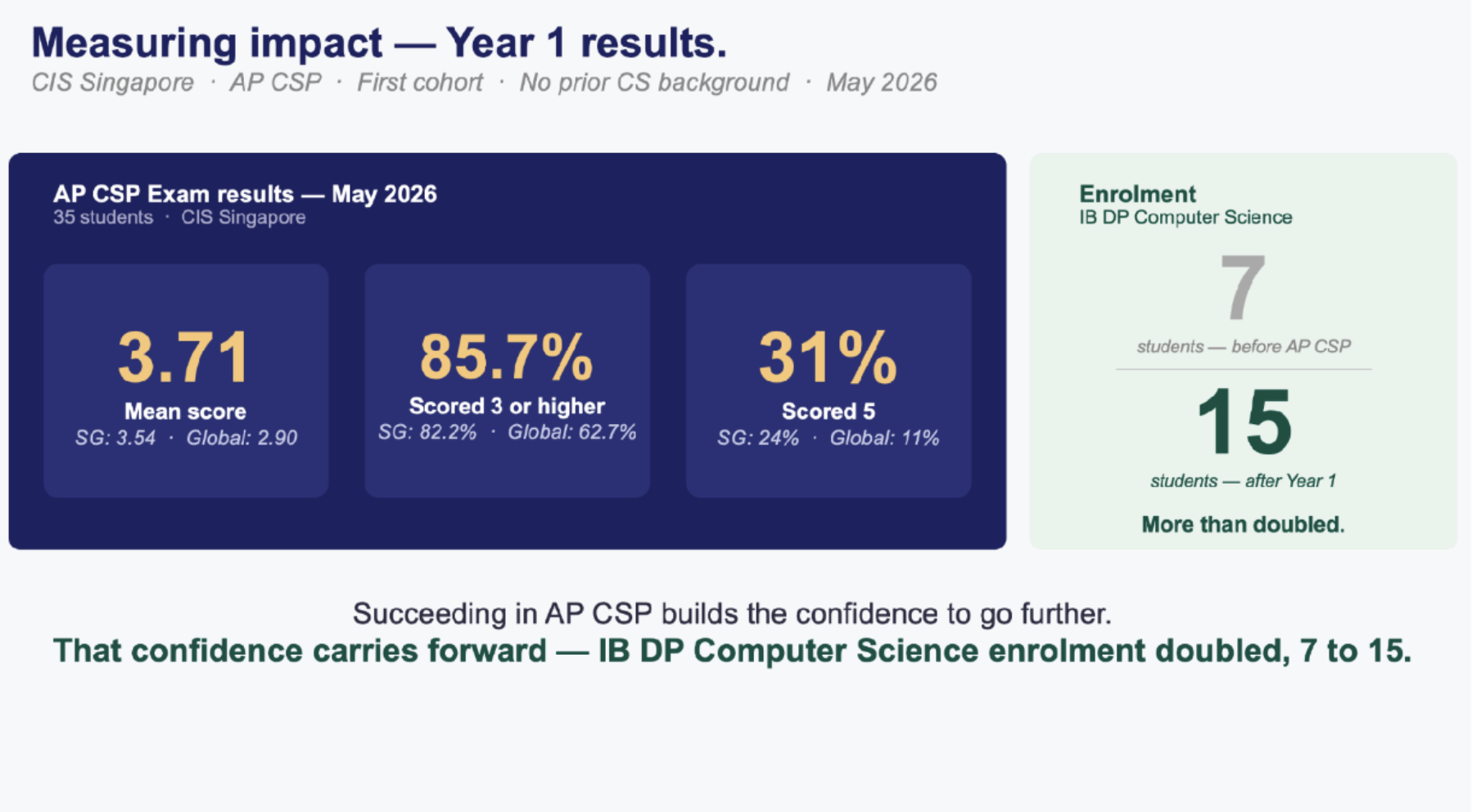
This is not the result I am more proud of, it was the spark that was ignited in students for computer science. Enrolment in the IB DP Computer Science course more than doubled the following year, growing from 7 to 15 students. Strong exam results are wonderful. But seeing more students choose to continue in computer science, now feeling genuinely ready and excited to go further, is exactly the outcome this pathway was designed to create.
Sharing What We've Learned
I believe many schools that offer the MYP alongside AP or IB Diploma pathways have this same opportunity, one that is simply waiting to be intentionally designed. While the specific pathway will look different in every school, whether in the destination courses, the underlying opportunity remains the same: creating a coherent progression that builds students' confidence, skills, and readiness for computer science programming... One guiding question frames this progression wherever you teach:
Given the strong foundation the middle years programme already provides, and the skills students are required to have in their destination courses, how might schools bridge that space intentionally to better prepare students for what comes next?
That question was at the heart of what I shared with an international community of educators at the AP Global Conference. The warmth of the response made it clear that many schools are eager to explore this opportunity further. I felt fortunate to contribute both a practical model and evidence from its implementation to the conversation, and I am deeply grateful to Canadian International School, Singapore for the opportunity to represent our work and learning community on such a meaningful global stage.
Ruchika Dutt teaches AP Computer Science Principles and IB DP Computer Science at Canadian International School, Singapore. She presented “Bridging Pathways: Designing Vertical Computer Science Programs” at the College Board AP Annual Conference 2026.

Canadian International School